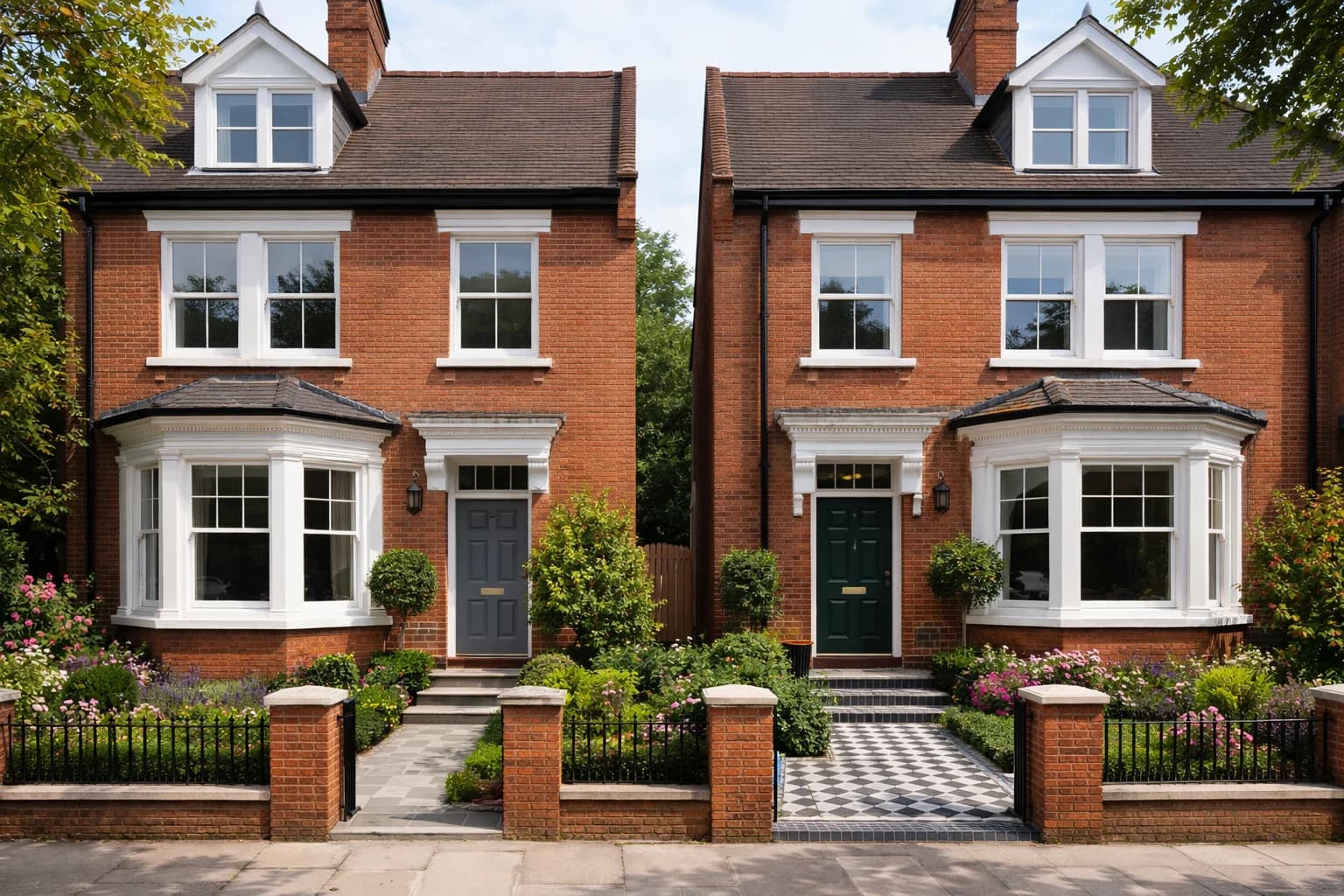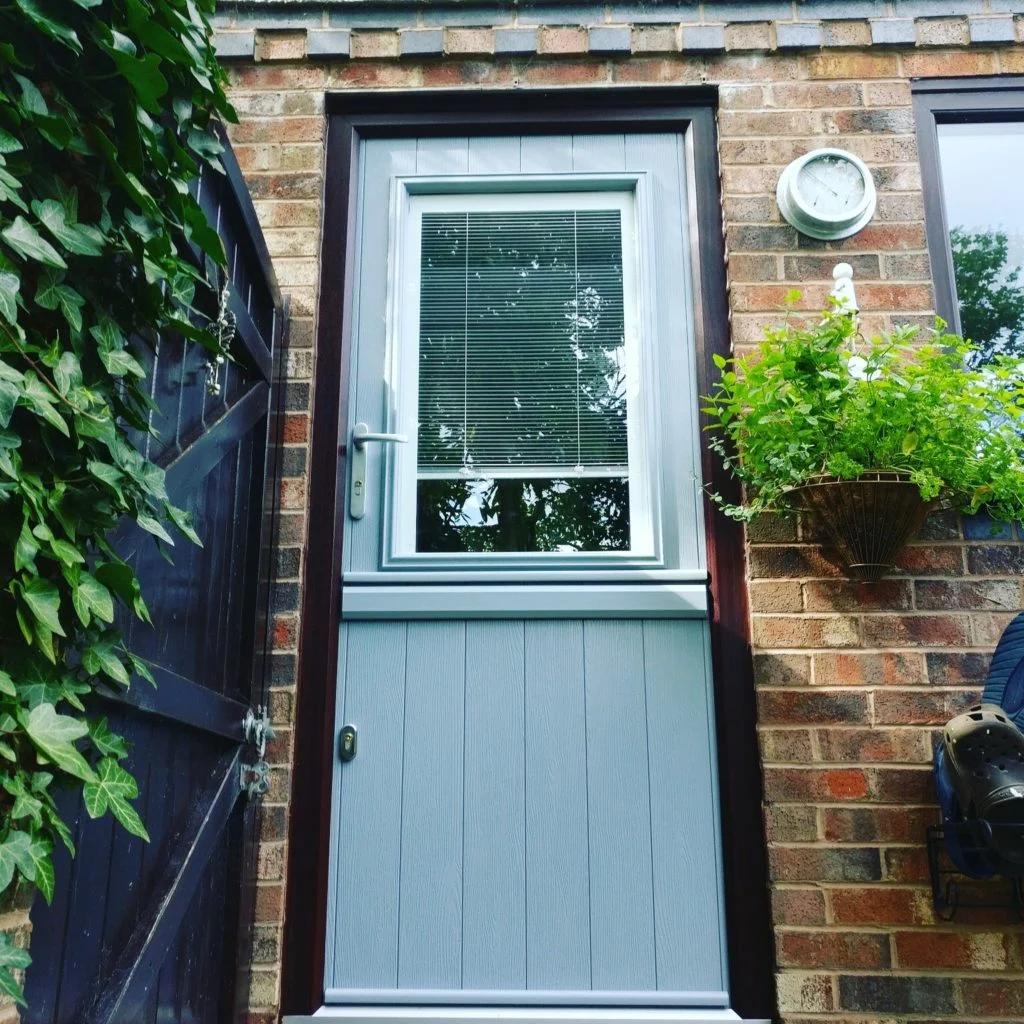
A stable door suits a kitchen, utility room or garden entrance where you would open the top for fresh air and keep the bottom shut. Before you choose one, think through an ordinary day. Will you use the split often enough to make the extra locking steps worthwhile?
Is a stable door right for your entrance?
A stable door is split horizontally into two leaves. You can open the upper leaf on its own, or bolt the two leaves together and use them as one door. Our stable doors are bolted together at the meeting rail when closed, with full-height multipoint locking and anti-snap cylinders as standard.
Opening just the top lets air into a kitchen or side entrance and gives you a view of the garden. A closed lower leaf helps keep a toddler or a dog in the room while the top is open, but it is not a safety gate. A child can climb it and a dog can jump it, so think about who uses the entrance and how.
Shopping bags, garden tools and quick trips in and out can make a conventional door easier to live with. A stable door still opens as one full door when the leaves are bolted together, but you have to manage the bolt. Picture arriving with your hands full, locking up at night and opening the top on a windy day.
What to choose before ordering
The size and condition of your opening shape the options we can offer. Settle these decisions before ordering:
| Decision | Why it matters at home | What the quote should record |
|---|---|---|
| Opening direction and hinge side | An outward swing needs clear space outside. An inward swing uses floor space indoors | Which way the door opens, the hinge side and the clearance to walls, steps and fittings |
| Bolting and locking | You need to know how each leaf is secured, together and on its own | How the leaves bolt together, the locking points and the order for locking up and opening |
| Meeting rail and seals | The split adds a joint where wind-driven rain and draughts have to be kept out | The seals, the drip bars and how the frame is sealed into the opening |
| Glazed or solid upper leaf | Glass changes daylight and privacy at eye level | The glass position, any privacy glass and the glazing specification |
| Threshold and floor levels | A raised threshold can be awkward at a busy entrance. The existing sill and outside level affect the detail | The threshold, inside and outside levels, drainage and any making good |
A photo you like may show hardware or a threshold that will not suit your opening. Your itemised written quote should state the handle, hardware, glazing, threshold and locking arrangement, including how the two leaves close and seal together.
If the whole door and frame are being replaced, the new door has to meet the energy performance standard for replacement doors in Approved Document L and be draught-proofed. Our replacement window building regulations checklist explains how certification works for replacement windows and doors.
Locks, seals and the meeting rail
At the survey, ask us to show you how the whole door locks and how the upper leaf locks when it is shut on its own. Bolting the leaves together does not lock the door. A closed lower leaf does not secure an open upper leaf either. Make sure you can follow the locking steps for the hardware we propose before you order. If you already have a door that only locks when you lift the handle, our guide to front door multipoint lock problems explains the usual causes.
Our stable doors have a drip bar on each leaf to shed rain away from the meeting rail, and draught seals around the frame and at the join. Tell us if the entrance faces driving rain, and agree how the threshold will meet the door. Both leaves need to close without catching.
Glass and threshold choices
A glazed upper leaf brings daylight into a kitchen or utility room. A solid or obscured panel gives more privacy. Integral blinds can be fitted inside the glass of a stable door, which keeps the blind clear of the open leaf and away from dust. We confirm the glass and blind options for your opening at the survey.
If the door sits beside a step or uneven paving, or you use it many times a day, note the floor level on both sides and the space the door needs to swing.
What the survey needs to settle
At the survey, show us how you use the entrance and point out anything the door could hit: a wall, a radiator, an outside light or a step. Agree the hinge side and the height of the meeting rail, so the top opens at a comfortable height from inside. Point out draughts, water staining or damage around the existing frame so we can include the opening in the fitting plan.
Use this checklist when you talk through a stable door:
- Opening and swing: measure the opening, choose the hinge side and confirm both leaves can open as intended.
- Daily use: have us explain bolting, opening, closing and locking for the exact arrangement proposed.
- Weather: agree how the meeting rail, frame edges and threshold will be sealed and finished.
- Look and access: settle the glass or panel, privacy, threshold and the clear width you walk through.
- Scope of work: get an itemised written quote covering the door, hardware, removal of the old door, fitting, finishing and any extra work the survey finds.
Some layouts and thresholds will not suit every opening, so we settle those limits at the survey, before anything is ordered.
When a standard door is the better choice
If you would rarely open the top on its own, a single door is simpler. There is one leaf to lock and one handle to use, with no bolt between the halves. A uPVC door or a composite door with a glazed panel still brings in light. For a wider garden opening, our guide to choosing French, sliding or bi-fold patio doors compares the options.
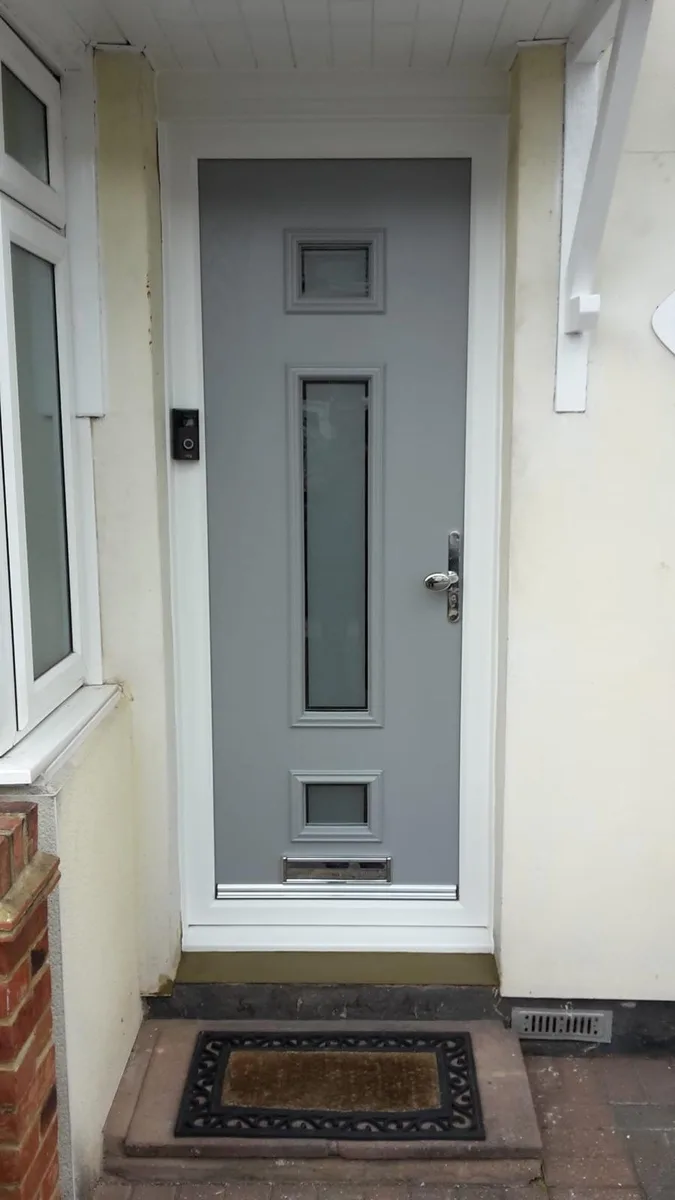
Choose a stable door if you will use the top opening often and are happy with its locking routine. Ask for an itemised written quote after survey for both a stable door and a single door in the same opening, so you can compare them like for like.
How Cii can help
Cii Double Glazing is a family-run business, established in 2009, and our team has over 55 years of combined experience. We survey, supply and fit uPVC and composite stable doors across Essex, East London and Hertfordshire. Our own team carries out the survey and the fitting, and every installation comes with a 10-year installation guarantee.
At the survey we measure the opening, check the threshold and the space on both sides, and show you how the leaves bolt, lock and seal. Your written quote then lists the door, glass, hardware and fitting work.
Book a free home survey and written quote.
FAQ
Do stable doors open in or out?
Either, depending on the door and the entrance. At the survey we decide which way the door should swing and check that both leaves clear nearby walls, fittings and steps.
Can the top half of a stable door be locked on its own?
Yes. Each leaf can be secured, and when both are shut and bolted together the multipoint lock engages along the full height of the door. We show you the locking sequence at handover so you know how to secure the door in each position.
Do stable doors let in more draughts than a standard door?
Not when they are fitted properly. Seals run around the frame and along the meeting rail, and drip bars shed rain away from the join. On an exposed wall we pay closer attention to the meeting rail and threshold.
Is a stable door suitable for the front of the house?
It can, but most people choose one for a back, side or utility entrance. For a main front door where security and kerb appeal come first, a single composite or uPVC door is usually the better fit. We will give you an honest view at the survey.