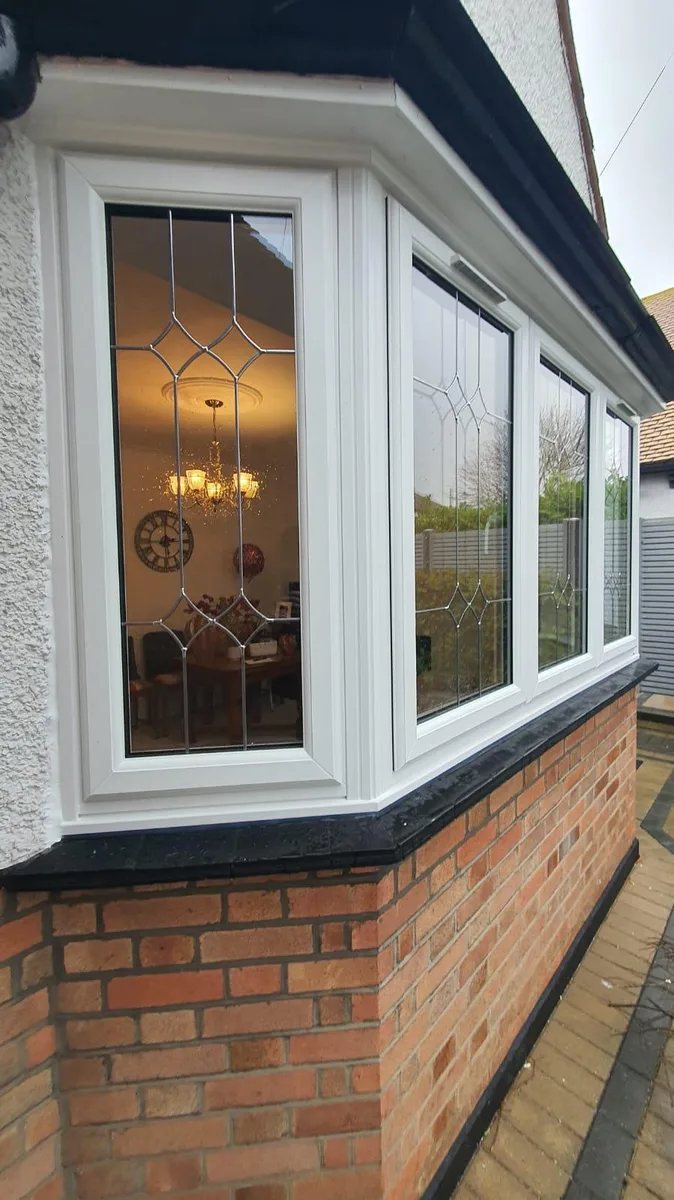
Privacy glass lets daylight into a room while blurring the view through the pane. Choose it by thinking about where someone could look in from, and how you use the room after dark. Obscure glass hides detail, but someone standing close to it in a lit room can still show as a shape.
What obscure glass hides, and what it does not
Privacy glass usually means obscure glass: a textured or frosted pane that scatters light and blurs what is behind it. It hides faces, furniture and detail. It does not always hide outlines, movement or shadows, especially when someone stands near the glass with a bright light behind them.
Night is when this matters most. With the lights on inside and dark outside, the room is much brighter than the street or garden, and a figure near the pane is easier to make out. A pattern that looks private in daylight can still show a silhouette after dark. If you need to hide movement as well as detail, plan for a blind or curtain too.
Reflective or tinted glass is not a dependable answer. A mirror effect only works while the outside is brighter than the room, so it reverses once you switch the lights on. Government guidance on householder permitted development states that one-way glass does not count as obscure glazing.
Match the pane to the sightline
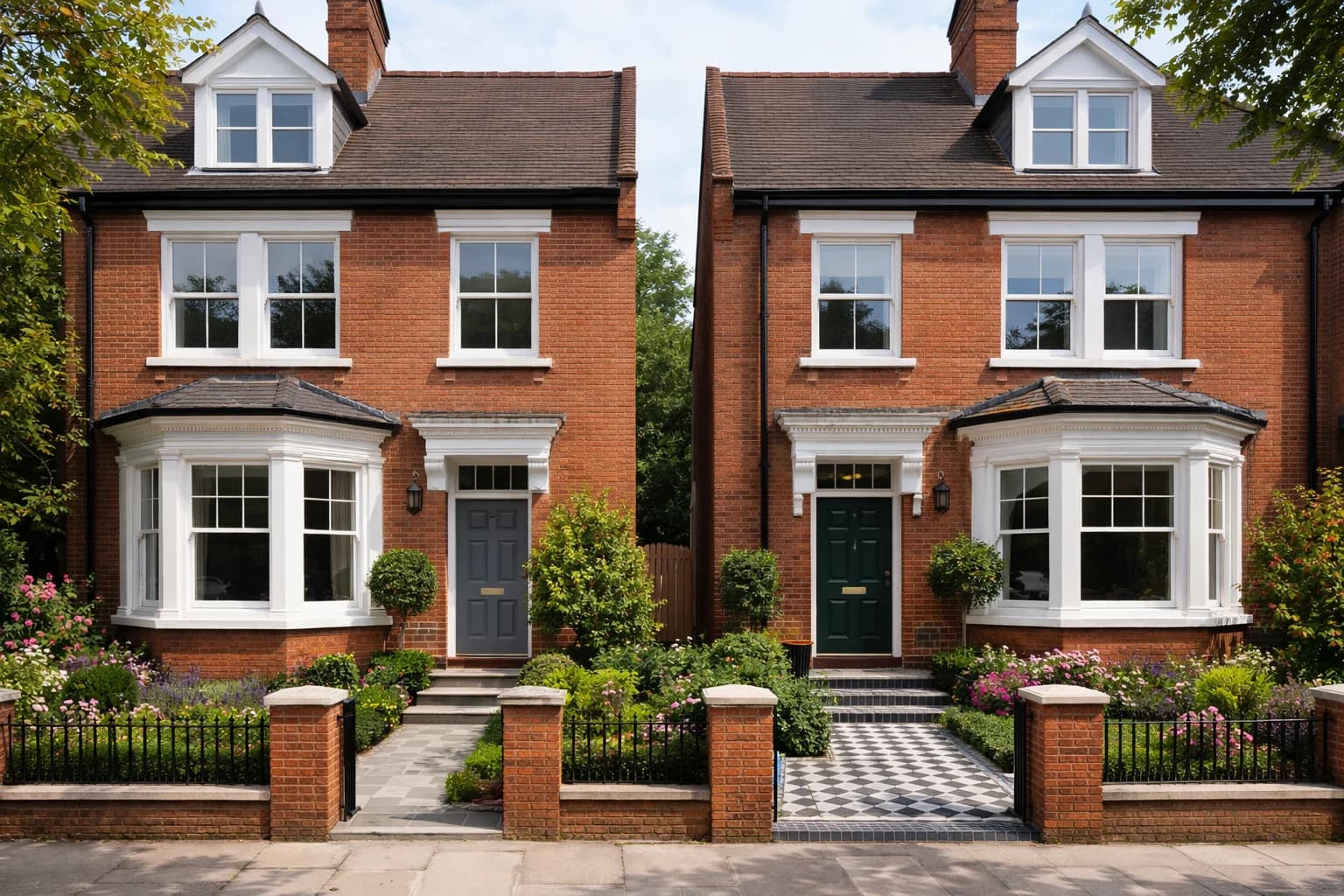
Before the survey, stand where someone could look in: the pavement, a shared path, a neighbour's garden or the window opposite. Work out whether their view reaches the whole room or only part of it. Then picture the same view in the evening with your lights on.
| Situation | Glass to consider | What else to check |
|---|---|---|
| Passers-by can see into the lower half | Obscure glass in the lower pane, clear glass above where the window layout allows it | Whether someone standing close to the clear pane is visible |
| A neighbour's window looks straight in | Obscure glass across the part of the window that meets their view | The view from their window height, not only from street level |
| Bathroom, toilet or landing | Obscure glass across the whole window | How the window opens for ventilation, and whether an open sash exposes the room |
| You want a clear view out by day | Clear glass with a blind or curtain you can close | Where the blind sits in relation to the handle and the opening sash |
The same guidance notes that privacy glass is normally rated on a scale of 1 to 5, with 5 the most private. Ask to see the obscure glass options for your windows, and look at them against daylight rather than in your hand. Name each pane and its position in the quote, rather than asking for "privacy glass" for the whole job.
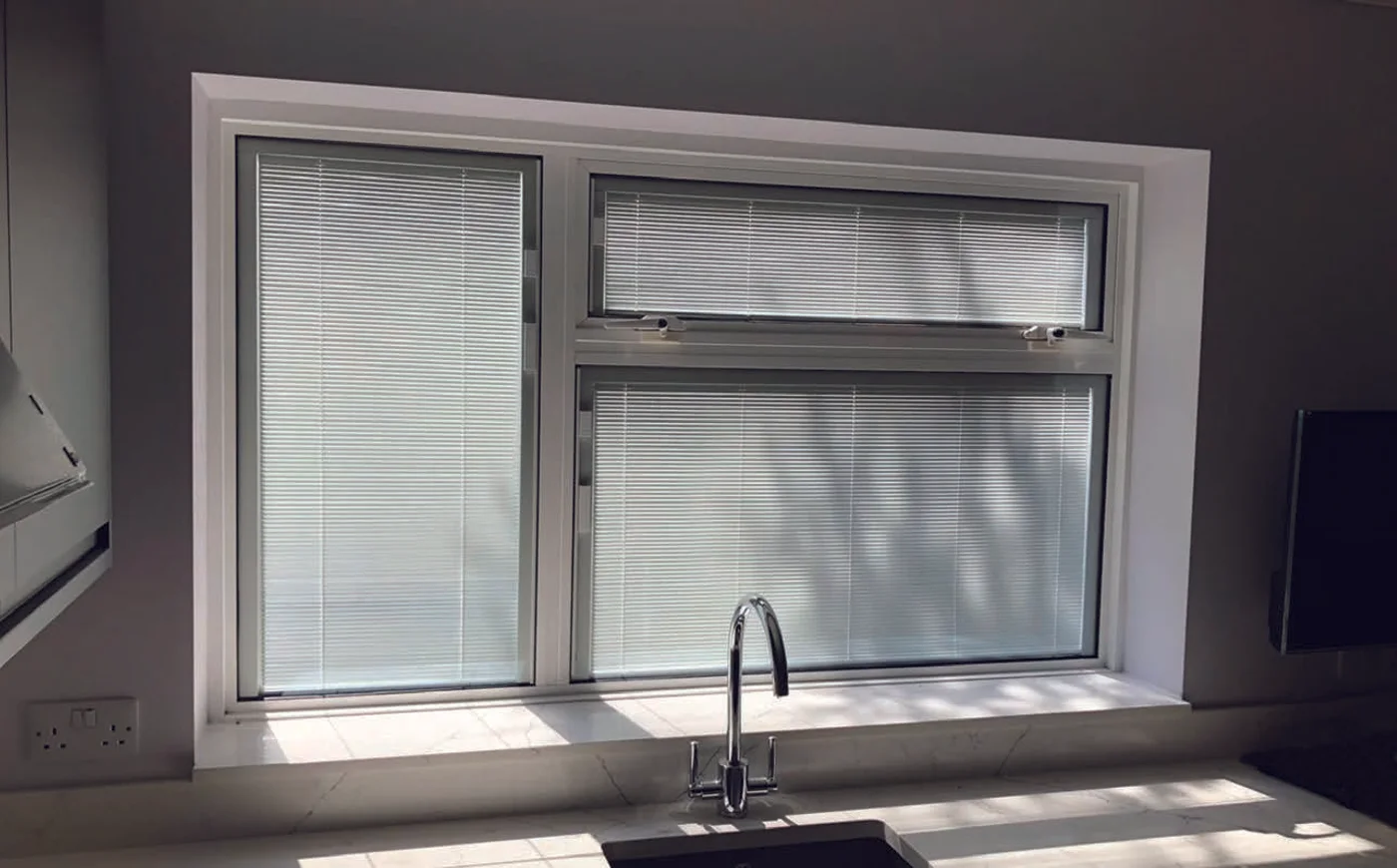
If you want clear glass by day and privacy at night, integral blinds are another option. The blind sits sealed between the panes, so it stays clean and does not catch on the handle or the opening sash. We confirm at survey whether integral blinds suit each window.
Plan the glass and the opening together
You do not have to obscure the whole window. A clear upper pane keeps a view of the sky while an obscure lower pane screens the room. Bear in mind that a neighbour on a higher floor may still be able to see through the clear part.
Check the window open as well as closed. An obscure sash on a casement window still leaves a gap when it is open, and a passer-by may see through that gap. A tilt-and-turn window can be tilted for ventilation with only a narrow gap at the top, but turning it fully open changes the view again. Our guide to tilt-and-turn vs casement windows explains how each opens and the room it needs.
Ventilation still matters in a bathroom or kitchen. If a window is an escape route from an upstairs room, the opening sash has to stay large enough, so we settle the opening layout at survey before fixing or restricting any sash. Our replacement window building regulations checklist covers ventilation, escape and certification.
Safety glass and side-facing windows
Obscure glass is not automatically safety glass. Approved Document K treats low-level glass in windows, and glass in and beside doors, as critical locations (Diagram 5.1). Paragraph 5.2 says glass in those positions must break safely, be thick enough to resist impact, be in small panes or be permanently protected. We identify those positions at survey and specify glass that is both obscure and safe where both are needed.
Side-facing windows can carry planning rules. The government's technical guidance on householder permitted development says that for an extension built under permitted development, upper-floor windows in a side wall must be obscure glazed. They must also be non-opening unless the parts that open are more than 1.7 metres above the floor of the room. The guidance sets the same conditions for side windows in roof extensions, and says side windows should be obscure glazed to at least level 3.
An existing side window may also be covered by a condition on the original planning permission requiring obscure glass or a restricted opening. If you want to change it to clear glass or a larger opening, check the decision notice first and ask your council if you are unsure. The Planning Portal guidance on doors and windows explains when replacing windows needs permission. Planning, building regulations and ventilation are separate checks, and approval on one does not settle the others.
What to agree at the survey
At the survey, show us where someone could look in, then agree:
- which panes are clear and which are obscure
- how much of the room shows with the lights on and someone near the glass
- which way each sash opens, the ventilation position and any blind or curtain you plan to use
- which panes need safety glass, any planning conditions on side windows and the frame layout
Your itemised written quote should then name each glass position and the opening arrangement. If the issue is an existing window that will not open or close properly, our window repairs follow the same steps: we survey the window, diagnose the fault, order any parts and then book the repair. We do not offer same-day or emergency repairs.
How Cii can help
Cii Double Glazing is a family-run business, established in 2009, and our team has over 55 years of combined experience. We survey, supply and fit uPVC and aluminium replacement windows across Essex, East London and Hertfordshire. Our own team carries out the survey and the fitting, and every installation comes with a 10-year installation guarantee.
At the survey we look at each window from the outside and the inside, agree where obscure glass is needed, and check safety glass positions and opening sashes. Your written quote then lists the glass, the opening layout and the fitting work for each window.
Book a free home survey and written quote.
FAQ
Can people see through obscure glass at night?
They cannot see detail, but with the lights on inside, someone standing close to the glass can show as a blurred shape. If that matters, add a blind or curtain you can close in the evening, or ask about integral blinds.
Does mirrored or one-way glass give privacy?
Only while it is brighter outside than in. Once the lights are on indoors, the effect reverses and people outside can see in. For privacy after dark, use obscure glass or a covering you can close.
Can I have obscure glass in only part of a window?
Yes, where the window is split into separate panes. A common choice is obscure glass in the lower pane and clear glass above, which screens the room while keeping a view of the sky. We check the layout at survey.
Can I change an obscure side window to clear glass?
Check first. If the window was fitted under permitted development or the planning permission includes a condition requiring obscure glass, changing it to clear glass could breach that condition. Look at the decision notice or ask your council before ordering.