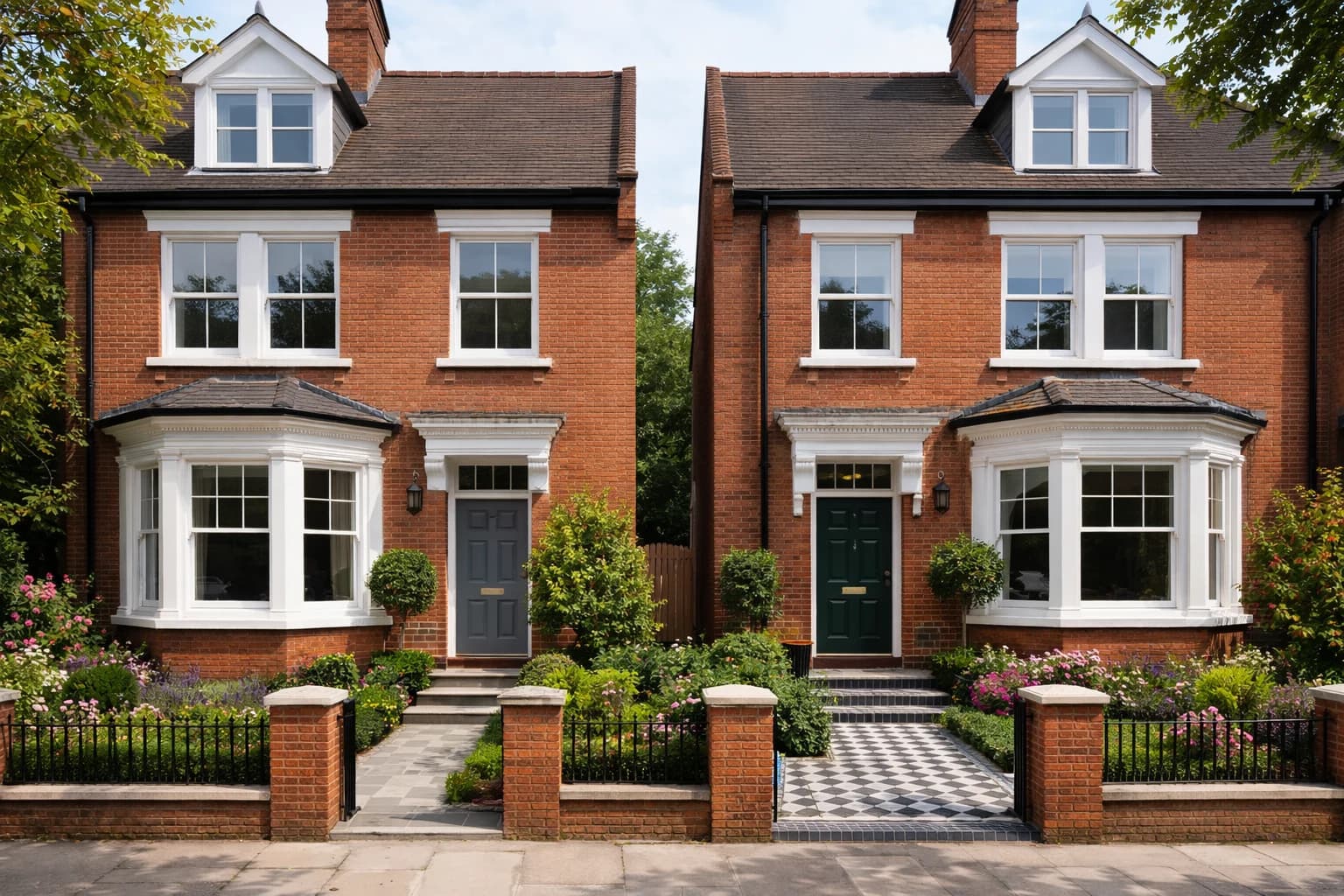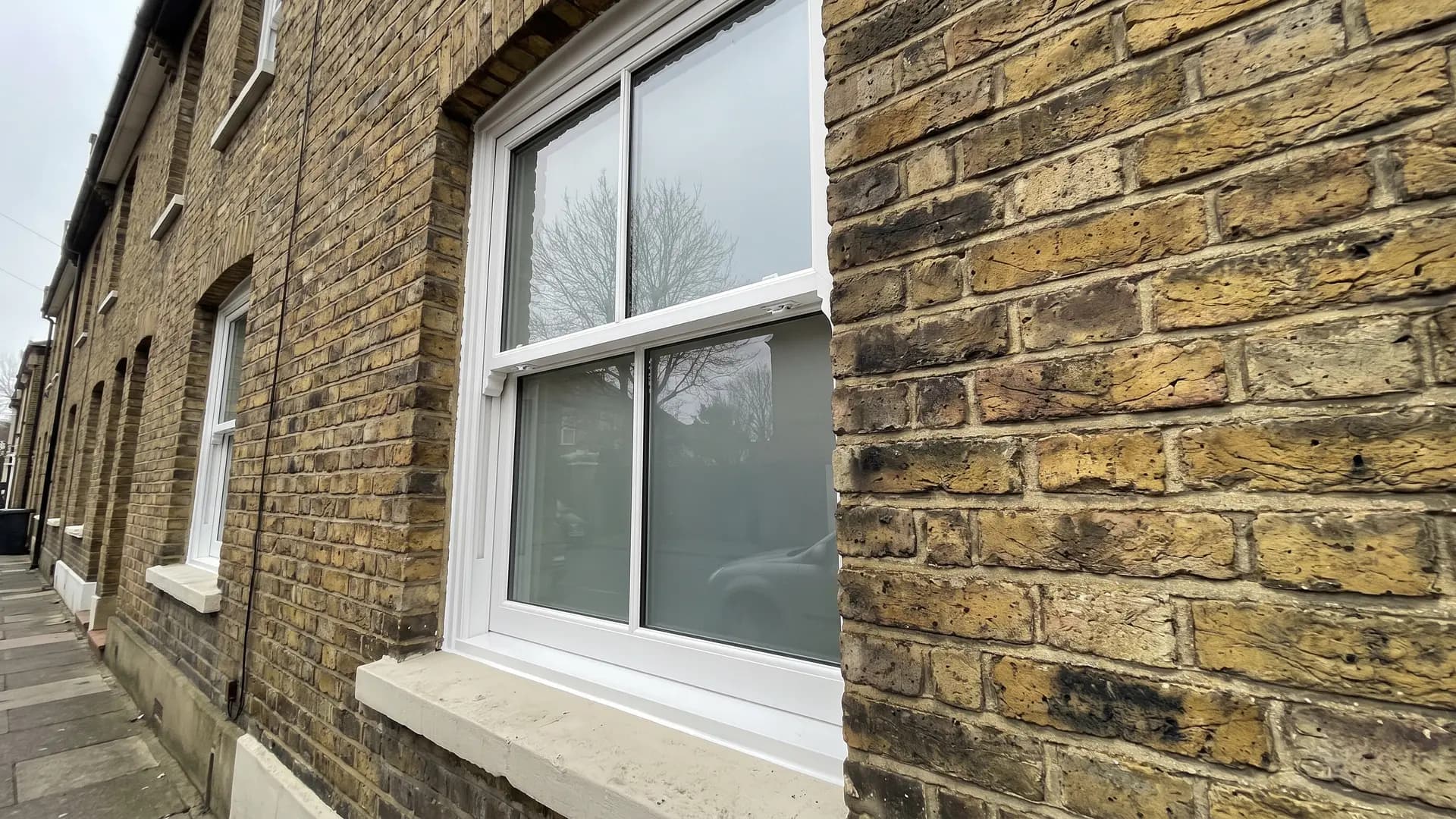
You can replace ageing sash windows with double glazing without losing the proportions that give them character. Before the new windows are ordered, agree where each frame will sit and how wide its visible sections will be. The meeting rail and glazing bars need the same attention as the glass.
Record the existing windows before choosing a replacement
Look at the whole elevation, including windows that still work well. Note which details repeat across the house:
- the opening size, the visible glass area, the relative heights of the two sashes and the position of the meeting rail
- whether each sash has one pane or smaller panes divided by bars, and how many
- how far back the frame sits in the reveal, its visible width, the sill and any shutters or architraves
- sash horns, the shaped projections below the meeting rail on the upper sash
- which sashes open, where the catches sit and how you use each window for ventilation
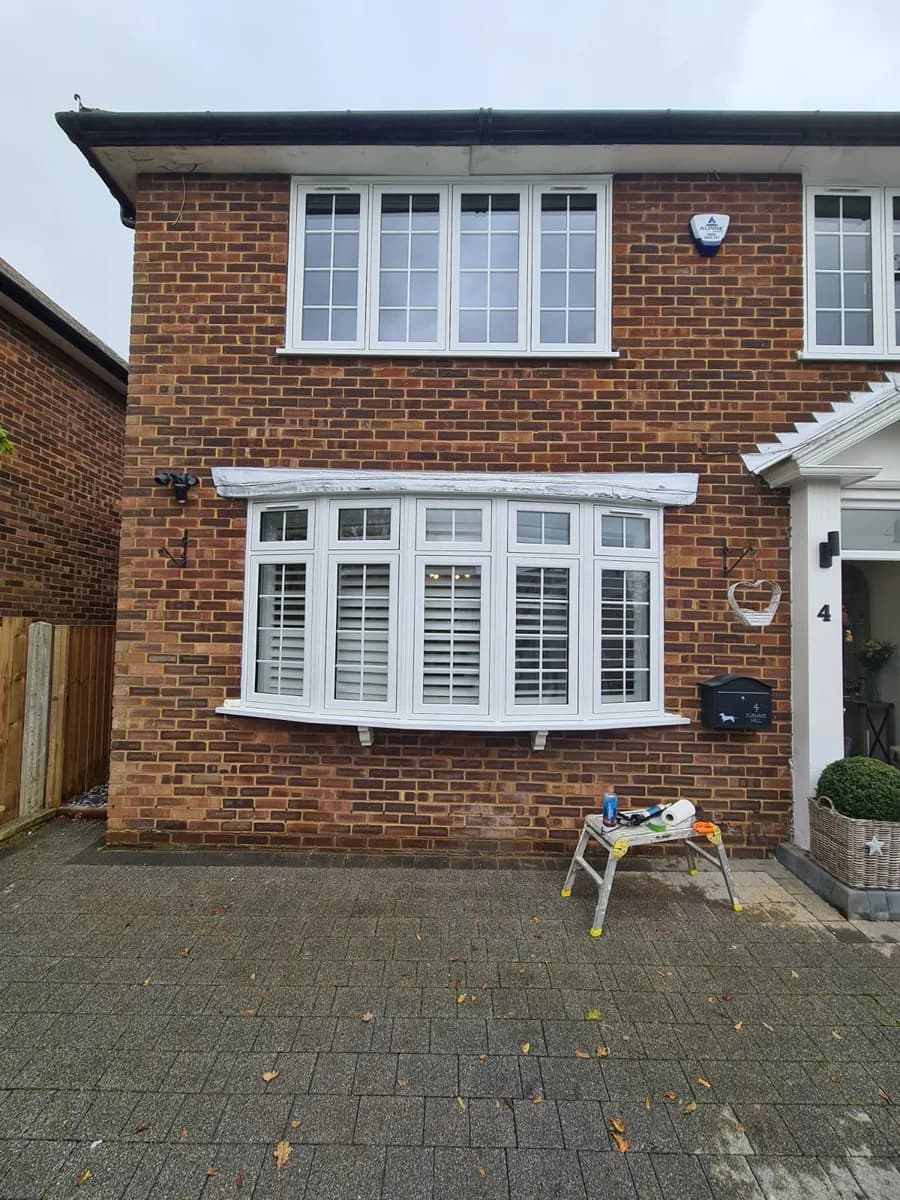
A replacement sash can fit the masonry opening and still leave less visible glass. The meeting rail can also end up out of line with the neighbouring windows. Compare the proposed sightlines and frame position with the originals before you approve the order.
Measure the opening and record the sightlines
The surveyor should measure each opening in several places and record how the old window sits within the reveal. A frame fitted brick to brick needs different dimensions from one set back behind the brickwork. Generic allowances for adding or deducting a few millimetres do not apply to every opening, because they depend on the opening and the fitting method. Record the masonry size alongside the visible glass area.
Repair, specialist work or full replacement?
If a sash sticks or lets in a draught, find out why first. Replacing the glass in an existing sash, replacing the sashes and replacing the whole box frame are separate jobs, so the quote should reflect the condition of the whole window.
| What the survey finds | Sensible next step | What changes |
|---|---|---|
| A faulty catch, misted unit or worn seal on an otherwise sound double glazed sash | Look at a repair first | The window stays in place. The fault is diagnosed, any parts are ordered, then the repair is booked |
| Original timber sashes or box frame you want to keep, but which need work | Ask a timber sash specialist to assess them | The original window may be kept and restored instead of replaced |
| A frame and sashes that need replacing, or a decision to move to new double glazed sliding sash windows | Get a measured specification for full replacement | The old window is removed and a new frame and sashes are fitted, so detailing and fitting position matter most |
We repair windows and doors through a survey visit to identify the fault, ordering any parts needed, then booking the repair. We do not offer same-day or emergency repairs, and we do not restore timber sashes. If keeping the original timber matters to you, have a specialist assess it before you agree to removal.
Specify the new sash for the look you want
Double glazed sliding sash windows keep the vertical sliding action of the originals. Compare the proposed drawing or sample with your existing windows. Small differences stand out when several windows line up across a frontage.
Agree the visible details
Start with the relative heights of the sashes and the meeting rail, then look at frame widths, bars and finish. Bars can be internal Georgian bars between the panes or external astragal bars on the glass, so ask which suits the look you want. If the existing windows have horns, compare their shape with our sash horn window options. Write down any unusual pane layout, and look at the proposed frame colour from both outside and inside.
Agree where the frame will sit
The reveal and sill matter as much as any shutters or internal trim. Bring the frame forward or add wide trims, and a deep opening can look shallow. Ask for the plaster and reveal finishing to be included in the written scope.
Specify glazing and operation together
Double glazing and modern sash seals cut the draughts that are common with ageing box sashes. Old timber sashes run on cords and weights. Our uPVC sliding sash windows use a balanced spiral mechanism instead, with no cords or weights, and both sashes tilt inwards so you can clean the outside glass from inside the room. Look at the frame drawing to see how the mechanism affects the visible frame width.
Check that the opening arrangement keeps the ventilation and access you rely on. The Planning Portal's guidance on replacing windows explains that replacement windows must meet rules on thermal performance, safety glazing, ventilation and means of escape. The specification should cover the requirements that apply to each window.
Check restrictions before ordering
The same replacement can face different restrictions from one property to the next. Seeing uPVC windows on a neighbouring house tells you nothing definite about permission for yours. On listed buildings, the Planning Portal's page on planning permission for doors and windows states:
"If you live in a listed building, you will need listed building consent for any significant works - internal or external." Planning Portal: doors and windows planning permission
The same page notes that conservation areas and other designated areas may have extra restrictions, and that a council can use an Article 4 Direction to withdraw permitted development rights.
| Property or work | What to establish before ordering |
|---|---|
| Listed building | Whether listed building consent is needed for the proposed windows, including materials, frames and glazing |
| Home in a conservation area | Whether the replacement needs planning permission and whether an Article 4 Direction applies |
| Flat, leasehold or changed window design | Whether planning permission, freeholder consent or other approvals apply to this property and proposal |
| Any replacement window | How the installation will meet building regulations and how compliance will be shown at handover |
For a protected property, speak to your local planning authority before ordering. Give them photographs, drawings, the proposed materials and the glazing layout. That leaves room to change the scope if there are limits on what you can remove or replace.
For energy performance, the government's Approved Document L sets out the thermal requirements for replacement windows in England. Compliance is shown either through a registered competent person scheme or through building control.
What happens during sash window installation?
Remove the old window and inspect the opening
Before removal, the fitting position and finishing work are confirmed. The bottom sash, upper sash and old box frame come out as agreed, while any shutters, sill or trim you are keeping are protected. Once the opening is exposed, it is checked for damage before the new window goes in.
Set, fix and seal the new frame
The new frame is set level and square. Packers at the fixing points keep the sides straight as the fixings go in. Expanding foam fills gaps but does not hold the frame in place. After the sashes and glazing are fitted, their movement is checked, the perimeter is sealed and the agreed finishes are made good.
At handover, try the locks, slide and tilt both sashes, and look for clear drainage paths. A sash can look straight yet catch as it slides, and a well-sealed frame can still sit too far forward in the reveal. Use the agreed drawings and the itemised written quote to check the finished work. For more on what gets measured and agreed beforehand, see what happens at a window and door replacement survey.
How Cii can help
If you have decided that new sash windows are right for your home, the details above are what we agree with you at survey. Cii Double Glazing is a family-run business, established in 2009, with over 55 years of combined experience in the team. Our own team surveys and fits uPVC and aluminium windows across Essex, East London and Hertfordshire, and every installation carries our 10-year installation guarantee. Book a free home survey and written quote to find out what a suitable sash replacement would involve.
FAQ
Do new sash windows still use cords and weights?
Ours do not. Our uPVC sliding sash windows use a balanced spiral mechanism inside the frame, so there are no cords to break or weights to rebalance. The sashes still slide vertically like the originals.
Can I clean the outside of a replacement sash window from inside?
Yes, on our sliding sash windows. Both sashes tilt inwards, so you can reach the outside glass from inside the room. This is useful on upper floors where outside access is difficult.
Do I need permission to replace sash windows in a conservation area?
It depends on the property. Listed buildings need listed building consent for significant works. Conservation areas may have extra restrictions, including an Article 4 Direction. Check with your local planning authority before ordering.
Can new sash windows match the bars and horns on my existing windows?
Usually, yes. Glazing bars can be internal Georgian bars or external astragal bars, and sash horns can be included to match neighbouring windows. Record the existing layout so the surveyor can match it in the specification.