To fix a double glazing window handle, first work out what is making it hard to use. A cracked or loose handle may need replacing. A stiff one may be meeting resistance from a dropped sash or the lock behind it. Either way, you may not need a new window. Never force a handle that will not turn, and never prise open a locked sash, because that turns a small hardware repair into a bigger one.
How to fix double glazing window handle faults
Often a new handle is a simple job, as long as the rest of the window works. A handle that turns without moving the lock, or that gets stiff as the sash shuts, points to a fault somewhere else. The survey separates a handle repair from work on the lock, the hinges or the way the sash sits in the frame.
Tell the surveyor whether the handle wobbles, turns freely, stops partway or behaves differently when the window is open. Compare open and closed operation only if the window already opens safely. Leave a jammed window shut for the survey.
Signs the handle itself needs replacing
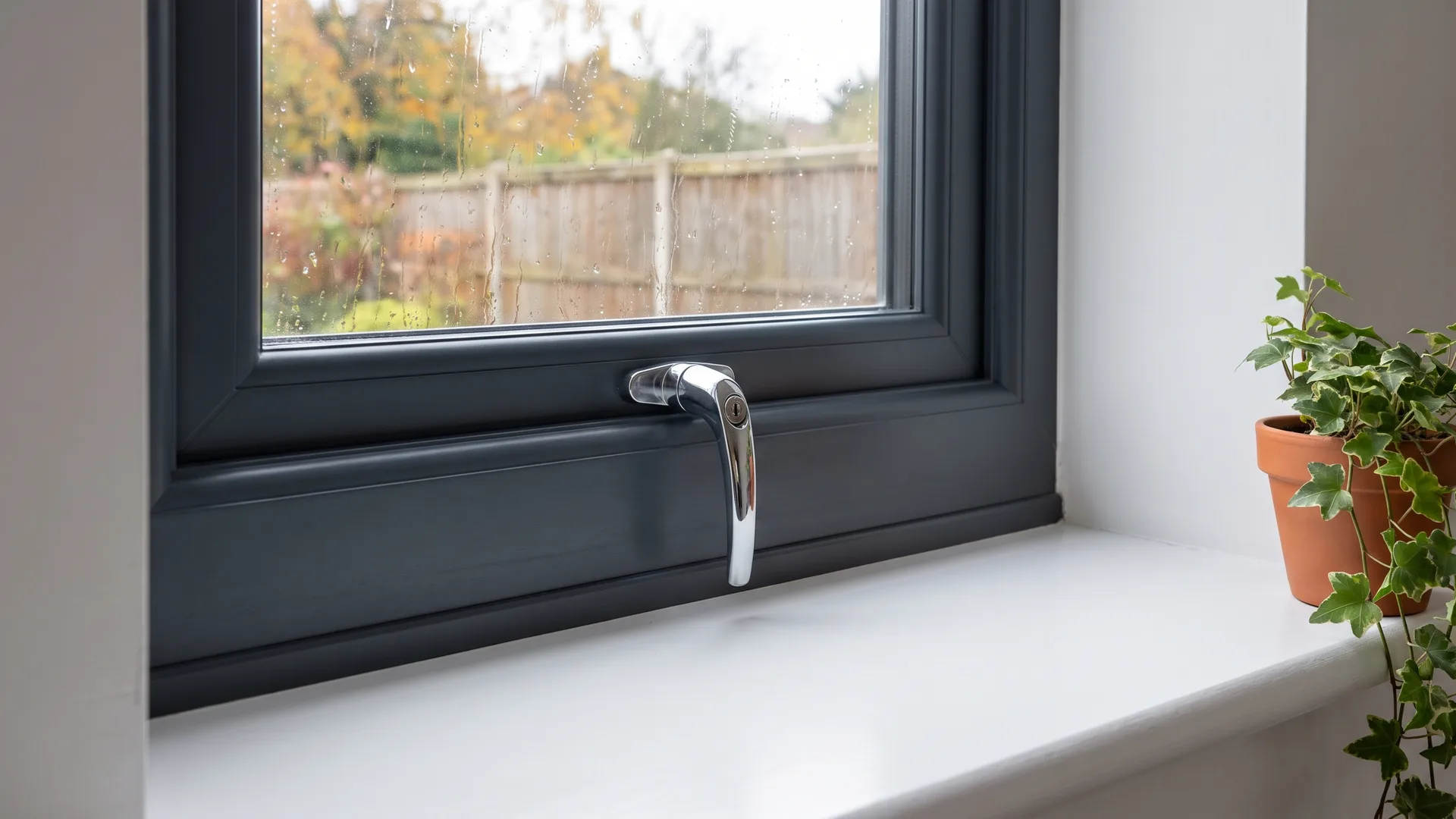
Cracks, a snapped lever or a handle body that moves on its base point to the handle itself. A loose handle is not always a broken one: the fixing screws may simply have worked loose. If the handle moves but the mechanism does not, the lock needs attention too. A new handle cannot make a faulty lock secure.
What your window's symptoms can mean
| What you notice | Possible area to investigate | Why it matters |
|---|---|---|
| Handle feels loose at its base | Handle fixing or handle body | The handle may be the only part affected, but looseness alone does not prove the lock is sound |
| Handle has cracked or snapped | Handle and its connection to the lock | A compatible handle may be replaceable. The mechanism it drives still needs checking |
| Handle turns but the sash stays shut | Spindle, gearbox or locking points | A new handle alone may not restore operation. Do not force the window open |
| Handle gets hard to turn as the sash closes | Sash position, hinges, keeps or locking mechanism | The locking points may be meeting the keeps out of line |
| Opening sash catches or sits lower at one corner | Hinges or sash alignment | The sash no longer meets the frame evenly, which affects closing and locking |
| Draught at an opening edge | Sash alignment, hinge condition or seal | A new handle will not close every gap. The source of the draught needs finding |
If your window no longer closes securely, arrange an inspection rather than assuming it has locked.
Handle fault or locking mechanism fault?
On most uPVC casement windows, a square spindle runs from the handle into a gearbox inside the sash. The gearbox drives a locking strip, often called an espagnolette, that moves the locking points along the sash edge into keeps on the frame. If the gearbox has failed, a new handle still will not open or lock the window.
If the handle stiffens as the sash closes, the locking points may be catching on the keeps. The surveyor checks the handle, the spindle and the parts it drives before recommending a repair.
Worn hinges or a dropped sash?
Casement windows usually hang on friction hinges, also called friction stays, at the top and bottom of the sash. When they wear or their fixings loosen, the sash drops and catches the frame. That puts extra load on the lock, so the handle feels stiff even though the handle is fine. A draught at the opening edge can come from the same poor fit.
Whether adjustment or new hinges will help depends on the sash, the frame and the fittings. If the sash still cannot close squarely after the hinges are sorted, the window needs a wider look.
Why identify the handle before ordering a replacement?
Window handles are not interchangeable just because they look alike. An espagnolette handle turns a spindle that drives the locking strip. A cockspur handle closes onto a wedge-shaped catch on the frame. Tilt and turn windows use a handle with two open positions. The replacement has to engage the existing mechanism, and any new hinges or locks must suit the sash too.
Spindle length, the distance between the fixing screws and the handle's offset all have to match. A handle bought by appearance can screw on and still fail to engage the lock. The survey identifies the faulty part and the exact fitting before anything is ordered.
When is hardware repair not enough?
A hardware repair only helps if the window can then close and lock properly. A distorted sash or damaged frame may need wider repair or replacement. A draught may also come from a worn seal rather than the hinges or the handle.
The part, the condition of the window and the fitting work involved all shape the quote. Ask for an itemised written quote after survey before choosing between a hardware repair and wider work. If several frames are failing, compare the repair quote with new casement windows.
For faults beyond the handles and hinges, such as misted units, cracked glass or patio door rollers, see our guide to seven double glazing repairs to check before full replacement.
How Cii can help
Cii Double Glazing is a family-run business, established in 2009, and our team has over 55 years of combined experience. We carry out window and door repairs on all brands across Essex, East London and Hertfordshire, including windows we did not fit. Our own team does the survey and the repair, so the work addresses the fault we find.
- At the survey, we check the handle, sash movement, hinges and locking operation where access is safe.
- We explain the fault, whether a hardware repair is suitable, and set out the work in a written quote.
- Once you agree the repair, we order a compatible part if one is needed.
- We book the repair visit when the part and scope are confirmed.
We do not offer same-day or emergency repairs. If the frame is past repair, we will explain the replacement options, which our own team surveys and fits with a 10-year installation guarantee. Book a free home survey and written quote.
FAQ
Can you get replacement handles for double glazed windows?
Yes, but no single handle fits every window. The handle type, spindle length and fixing positions need identifying first, along with how the handle connects to the existing lock. That is why the part is ordered after the survey, not before.
Why does my window handle turn but the window will not open?
The handle is probably no longer driving the lock. The spindle may have sheared, or the gearbox inside the sash may have failed, leaving the locking points engaged. Do not force the sash. The fix is usually a new gearbox or locking strip, not just a new handle.
Can a dropped casement sash be fixed without a new window?
Usually, yes. A sash that sits low at one corner normally has worn friction hinges or loose hinge fixings. New hinges matched to the window, with the sash realigned, often restore normal closing and locking, as long as the sash and frame are not distorted.
Should I keep using a window that will not lock properly?
Keep it closed and avoid opening it until it has been looked at. Do not force the handle to make it feel locked. A window that will not secure is a security fault, so arrange a survey promptly. We do not attend the same day, so plan for the survey and repair visit.