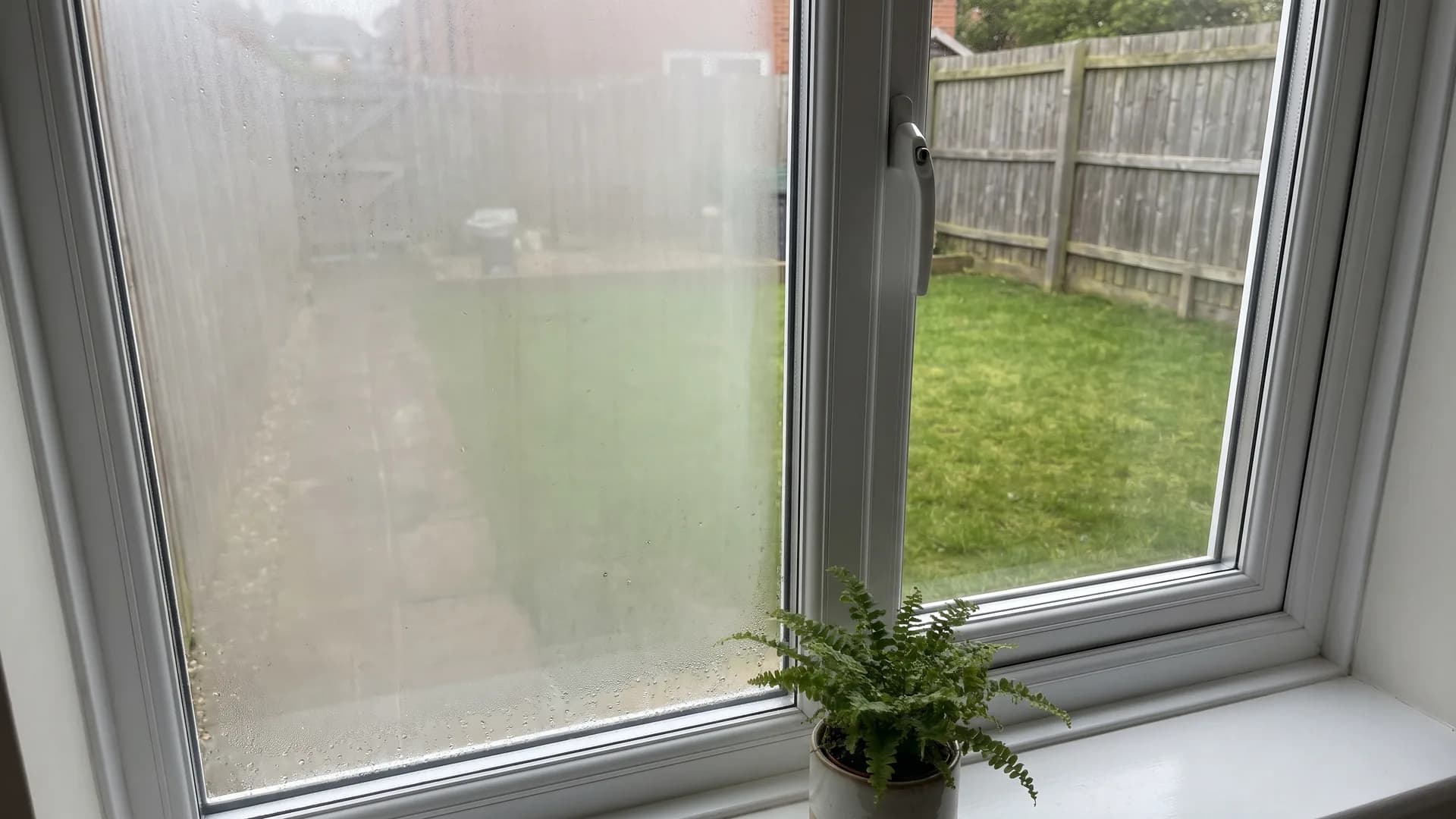
Fog trapped between the two panes usually means the sealed glass unit has failed, and you can often replace that unit while keeping the frame. If the moisture wipes off the room-side glass, the cause is indoor condensation, so deal with that first. A frame that cannot hold new glazing securely may need replacing.
"Repairing the window" can mean changing the glass, fixing a hinge or replacing the whole frame. The survey establishes which of those jobs the window actually needs.
First, find out where the condensation is
Wipe the room-facing glass with a dry cloth, then check the outside if you can reach it safely. Do not lean out of an upper-floor window. A patch that stays put between the panes, even as it changes shape with the weather, points to moisture inside the sealed unit.
| Where you see the mist | What it usually means | Sensible next step |
|---|---|---|
| On the room-facing surface, wipes off | Warm, humid indoor air has met cold glass | Improve ventilation and reduce moisture sources. Look into draughts or cold spots if it persists |
| On the outside surface, wipes off | Moisture has condensed on the outer glass | It usually clears as the weather changes. On its own it does not mean the unit has failed |
| Between the panes, cannot be wiped from either face | The sealed unit has lost its edge seal | Have the glass and frame surveyed for a replacement sealed unit |
Surface condensation and a failed unit can affect the same window. Where the mist sits tells you the likely glass problem. The survey picks up any separate frame faults.
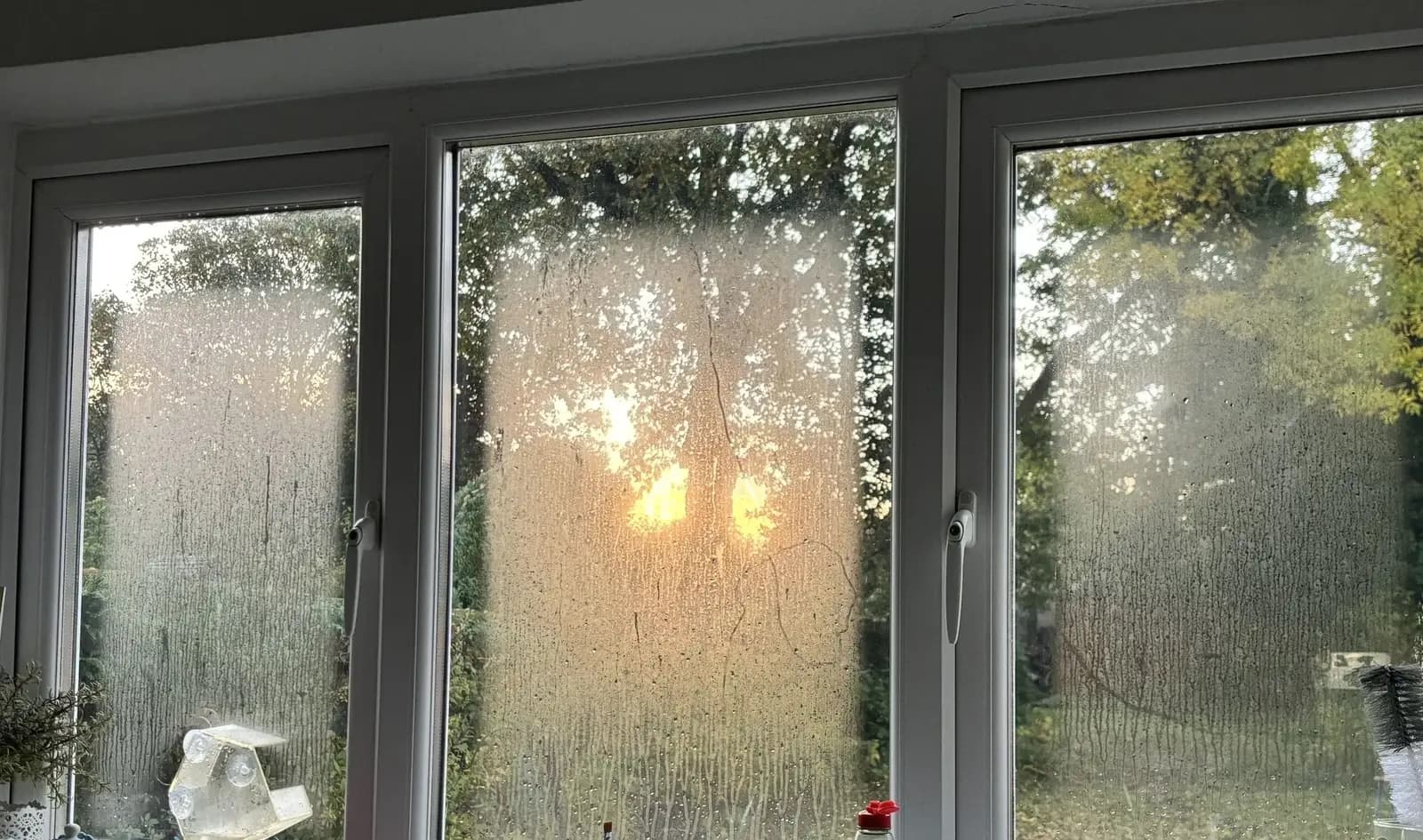
What has failed: the glass seal, a gasket or the hardware?
A double glazed sealed unit is two panes joined at the edges with a gap between them. Once moisture gets into that gap, a cloth, a dehumidifier or sealant around the frame cannot mend the failed edge seal. A new sealed unit is the lasting route back to clear glass.
Rubber gaskets sit around the glass, glazing beads hold the unit in place, and hinges and locks work the opening sash. A draught can come past the opening sash while the glass seal is intact. Equally, mist can form between the panes while the hinges still work perfectly.
| Symptom | Part to inspect | What might be needed |
|---|---|---|
| Haze or droplets sealed between the panes | Glass unit and its edge seal | A new sealed unit, if the frame is sound |
| Air coming past a closed opening sash | Opening seal, alignment, hinges and locking points | Adjustment, or a seal or hardware repair |
| Water around the frame after rain | Frame joints, external sealing and drainage slots | Find and correct the entry route. New glass alone may not help |
| Stiff handle or a sash that will not close properly | Hinges, handle, gearbox or alignment | Adjust or replace the affected hardware |
| Cracked glass | Glass unit, glass specification and the cause of the damage | A new sealed unit, plus a fix for any fitting fault behind it |
Water on the sill needs a closer look. It may have run down from condensation on the room side, come through the frame or the joint with the wall, or entered through damaged glazing. The source decides the repair.
Repair or replace: when the frame can stay
Keep the frame if it is stable, opens and locks as it should, and can take the replacement unit. The fitter removes the glazing beads, measures the unit and the opening, and fits a new sealed unit into the existing sash or frame. "Glass replacement" means changing the complete sealed unit, not one individual pane.
The new unit has to suit the opening and meet any safety glazing requirements for its position. That means measuring its size and thickness and allowing for the existing glazing system. Where nearby panes have a tint, leaded design or patterned glass, ask whether the replacement can match them.
A failed seal reduces the insulation the unit gives. A correctly specified replacement restores a sealed insulating gap, although we cannot promise what changing one unit will do to your heating bills. For a wider energy upgrade, talk about the frame as well as the glass.
Drilling the glass, injecting drying agents or sealing the outside may change how the mist looks. None of them recreates a factory-made edge seal or brings back the original insulating performance.
When a whole new window makes more sense
Replace the whole window if the frame is badly distorted, insecure, rotten or letting water into the wall. New glass cannot fix an opening that no longer adjusts to close and lock reliably. A complete window may also be needed if suitable beads or a compatible unit cannot be fitted safely.
A new window can also change the opening style or improve the whole specification, which may suit you if several windows are mismatched. Misted glass on its own is no reason to remove a sound frame. If you do decide to replace, our casement windows page and the full windows range show the options.
What to ask at the survey
Show the surveyor which panes mist, whether the moisture wipes off, and any trouble with opening, locking, draughts or rainwater. If the mist comes and goes, tell us when it is worst.
Ask these questions before you accept a quote:
- Is the moisture definitely between the panes? If not, what points to a glazing fault rather than surface condensation?
- Is the frame worth keeping? Ask about its condition, drainage, glazing beads, gaskets and whether the sash closes and locks properly.
- What exactly will be replaced? The quote should separate a new sealed unit from any hinge, handle, gasket, frame seal or full window work.
- What glass is specified? Ask about thickness, safety glass where it is required, thermal performance and matching the other panes.
- What does the finish include? Confirm removal of the old unit, refitting the beads, any making good, disposal and the guarantee on the repair.
If several windows have misted, each one should be assessed. One failed unit does not mean every frame needs replacing. Repeated leaks or damage across several frames call for a wider inspection.
What the written quote should separate
Unit size, glass type, access, safety or decorative glass and the condition of the beads and frame all change the work involved. A sealed unit quote covers a different job from one that includes hardware repairs or a new window. Ask for an itemised written quote after survey, and compare the scope as well as the total. Our guide to seven repairs to check before full replacement covers the hinge, handle, seal and lock faults that often sit alongside a misted unit.
How Cii can help
Cii Double Glazing is a family-run business, established in 2009, and our team has over 55 years of combined experience. We carry out window and door repairs on all brands across Essex, East London and Hertfordshire, including windows we did not fit. Every repair starts with a survey to diagnose the fault. We then order the made-to-measure unit or parts and book a separate repair visit. We do not offer same-day or emergency repairs.
If the frame is sound, we will recommend a new sealed unit. If it is not, we will explain the replacement options, which our own team surveys and fits with a 10-year installation guarantee. Book a free home survey and written quote.
FAQ
Why is there condensation on the inside of my double glazing?
Moisture on the room side forms when warm, humid air meets cooler glass, often in bedrooms, kitchens and bathrooms in cold weather. It wipes off and does not mean the unit has failed. Better ventilation and fewer moisture sources usually reduce it.
Does drilling and drying a misted unit fix it?
It can make the mist less visible for a while, but it does not restore the factory-made edge seal or the unit's original insulating performance. A new sealed unit is the lasting fix.
If one sealed unit has misted, will the others fail too?
Not necessarily. Units can fail at different times, and the survey assesses each pane. Point out every pane you are unsure about so the quote covers all of them in one repair visit.
What happens between the survey and the new unit being fitted?
The surveyor measures the unit and confirms the glass specification. The new unit is then made to that size, and the repair visit is booked once it is ready. The frame stays in use in the meantime.