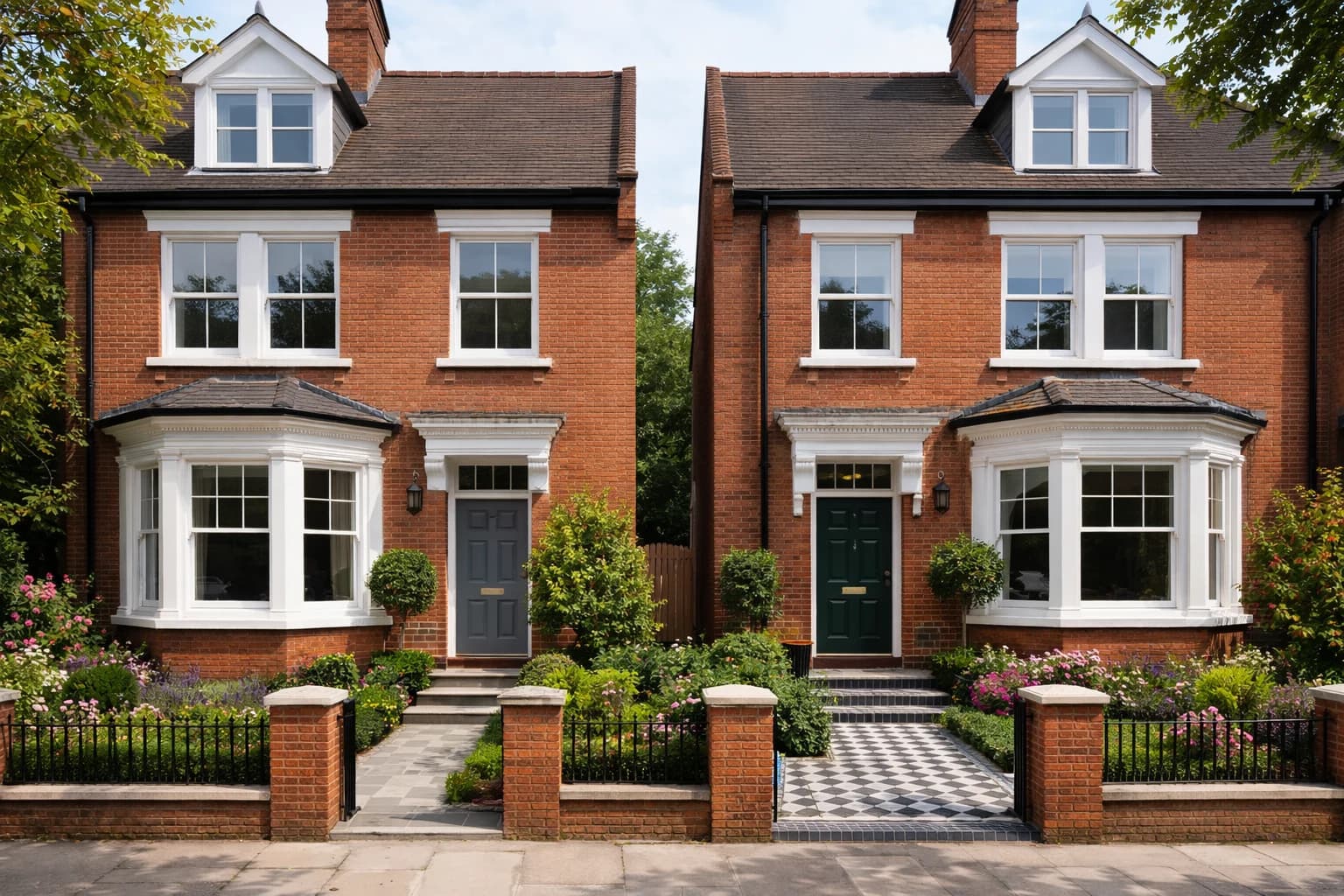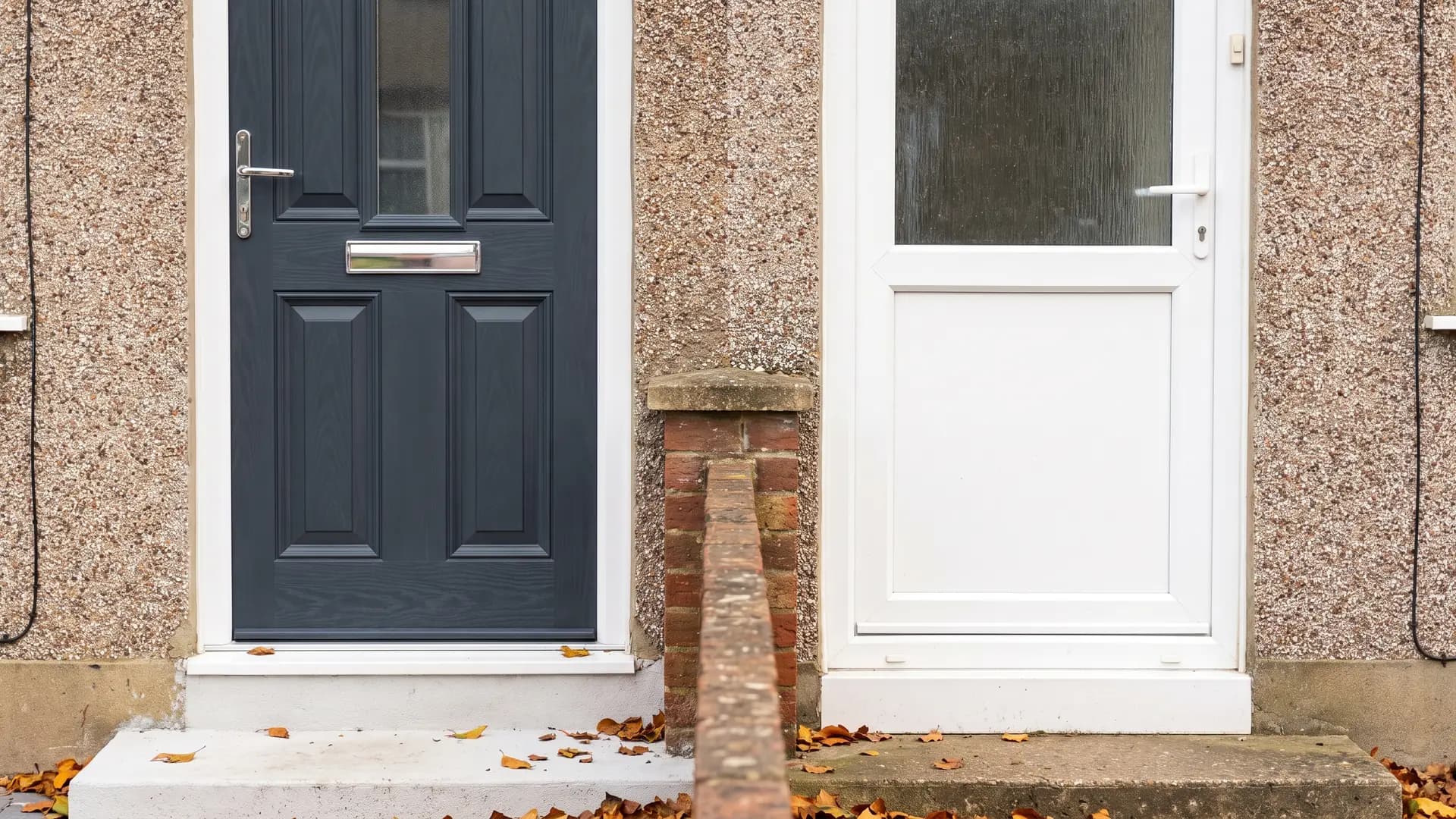
When weighing composite vs uPVC front doors, think about what your entrance needs to do. A composite door can give you a timber-style focal point, at a higher upfront cost. A uPVC door may suit the house and leave more room in the budget. Compare the complete door set, including frame, glazing, seals, lock and threshold, before deciding.
Composite vs uPVC front doors at a glance
| What matters | Composite front door | uPVC front door |
|---|---|---|
| Construction | Glass-reinforced plastic (GRP) skin over an insulating core | Multi-chamber uPVC profiles with a chosen infill panel or glazing |
| Look | Painted-timber effect and deeper panel detailing | Clean, simple lines, with coloured and wood-effect finishes available |
| Glazing | Solid or glazed designs, depending on the style | Solid panel or glazed designs, depending on the style |
| Maintenance | Wash the finish and care for seals and hardware | Wash the finish and care for seals and hardware |
| Budget | Generally the dearer choice | Generally the lower upfront cost |
| Best fit | A prominent entrance where colour or door style is a priority | A practical replacement where value and easy upkeep lead the decision |
Treat the table as a starting point. The glazing, hardware and fitting details can change which option makes sense for your doorway.
What are you actually buying?
Construction and appearance
A composite door combines materials. The leaf is usually a GRP skin over a high-density insulating foam core, which makes it rigid and resistant to warping. A uPVC door uses rigid unplasticised polyvinyl chloride profiles, with the selected panel or glass forming much of its visible face. The exact product specification tells you more than the material name.
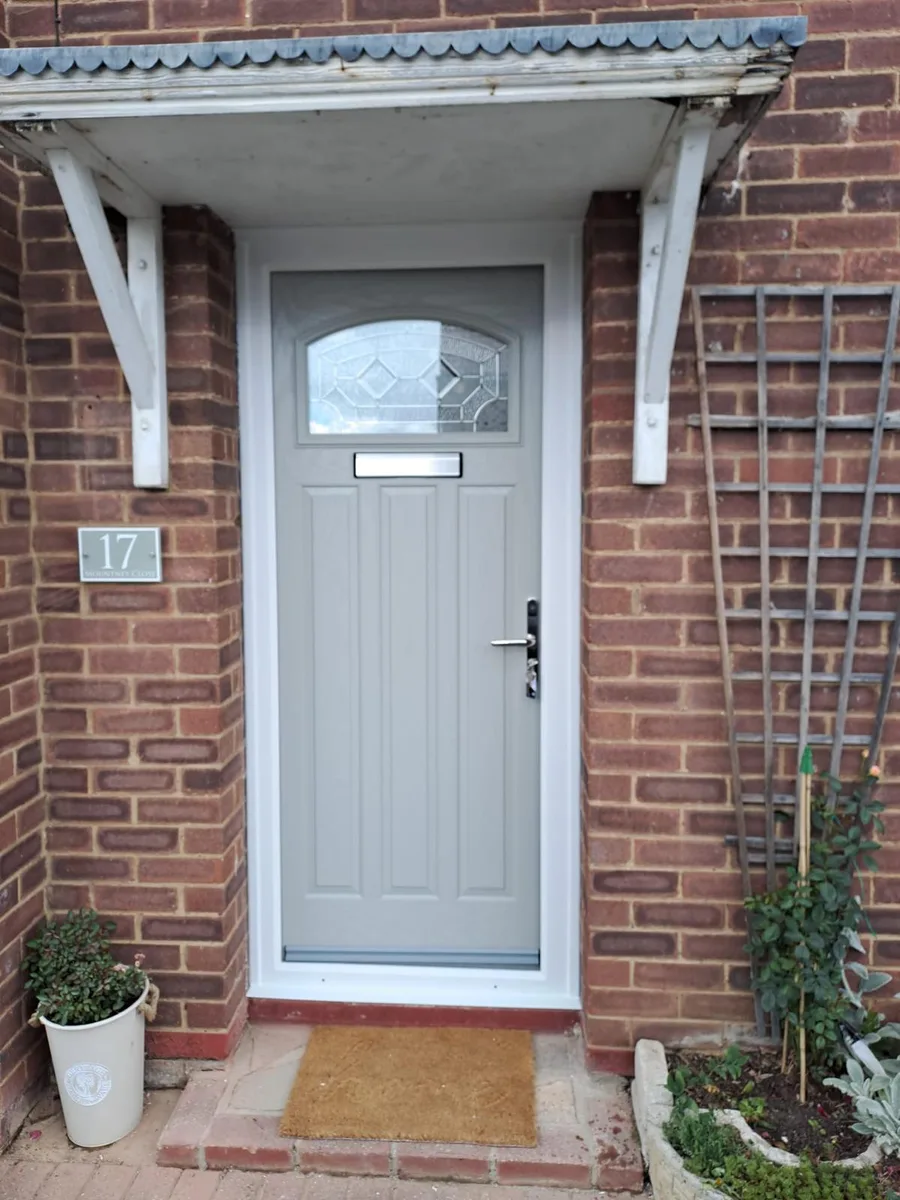
Stand back and look at the entrance from the pavement. A moulded, painted-timber-style composite design may suit older brickwork. If your windows have white uPVC frames, a simpler uPVC door might look more at home. Our composite doors and uPVC doors both come in coloured and glazed options. Hold finish samples against the existing frames in daylight.
Glazing changes the decision
Glass can make a dark hall feel less shut in. A small glazed panel high in the leaf lets in some daylight without putting the whole hallway on show to passers-by. A larger panel brings in more light at a shaded entrance. Include any sidelights or fanlight in the design, so the whole doorway looks right together.
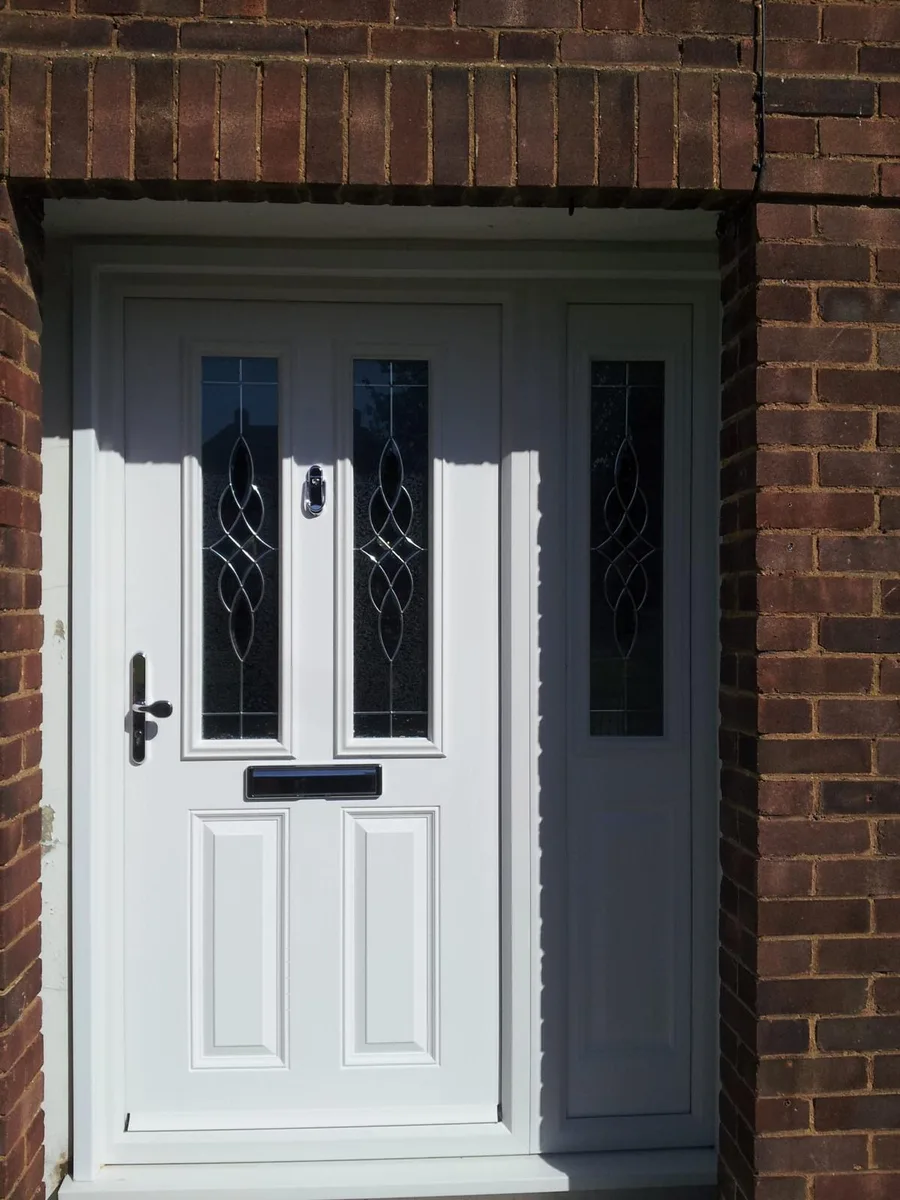
The quote should state the glazing layout, the decorative or obscured finish, and the safety and security specification that applies. Compare the rating of the glazed door set you intend to buy. On our composite doors the glass sits in a reglazeable cassette, so the design can be changed later without replacing the door.
Performance depends on the whole door set
Energy efficiency, draughts and noise
A composite core can insulate well, and multi-chamber uPVC profiles can too. For energy efficiency and heat loss, compare the stated thermal performance of the proposed complete door with your chosen glazing. A gap around the frame or a poor threshold seal can leave either type draughty. If the hall feels cold, show the surveyor where you notice it so the threshold and seals can be addressed.
For replacement doors in existing homes in England, Table 4.2 of Approved Document L, Volume 1 sets the standard for the complete doorset. Most front doors need a maximum U-value of 1.4 W/(m²·K) or a minimum Doorset Energy Rating of Band B. A door with more than 60% of its internal face glazed can meet Band C instead.
Road noise may be getting in around the glazing, letterplate or frame. Show the surveyor where you hear it. A heavier leaf will do little for a gap around the perimeter, so discuss the glazing and seals too.
Security and durability
Both door types can have multipoint locking. Our composite and uPVC doors are fitted with multipoint locks and anti-snap cylinders as standard. Look for the lock, cylinder, hinges, glazing and handle on the quote, along with whether any security accreditation covers the whole door set as specified. Ask how the frame will be fixed. Either door can develop worn seals or dropped hinges over time, and its finish can get scratched. A heavy leaf offers no protection against those problems.
Rain, strong sun and daily use
At an exposed entrance, pay attention to the threshold, seals and finish where the frame meets the wall. A door facing sustained afternoon sun needs a colour and finish suited to that position, following the manufacturer's guidance. Materials expand and contract with temperature. A sticking door calls for an assessment of its alignment, seals and lock before you pay for a replacement.
Picture the door open when someone is carrying shopping through it. Check the handle and letterplate positions, and whether everyone in the household can cross the threshold comfortably.
Cost, maintenance and the case for repair
Composite doors generally cost more upfront than uPVC. Opening size, frame replacement, sidelights, glass, hardware, threshold and making good all affect the fitted price. A basic leaf price is of little use beside a quote for a complete glazed replacement. If you are replacing front and back doors together, have each opening specified on its own terms.
For a fair comparison, ask for an itemised written quote after survey for each material, covering the same scope of work.
Both are low maintenance. Wash the leaf, frame and glass, clear the drainage paths, and follow the care instructions for locks, hinges and seals. Use products suited to the finish, as paint and abrasive cleaners may damage it. If your existing door is sound but catches, lets in draughts or has a faulty handle, an adjustment, a new seal or a hardware repair may save you replacing it. Our guide to double glazing repairs to check before full replacement covers door locks, keeps and alignment in more detail.
Which door fits your home?
| Your entrance and priority | Sensible starting point | What could change the choice |
|---|---|---|
| Period-style frontage where the front door is a major visual feature | Compare composite styles and finishes against the brickwork and existing joinery | A suitably detailed uPVC option may fit the budget and appearance better |
| Modern frontage with uPVC windows and a straightforward replacement | Compare matching uPVC finishes and glazing | A composite design may be worth more if you want the door to stand apart |
| Dark hallway facing the street | Compare glazed designs in both materials | Privacy, safety glazing and the specification of sidelights may decide it |
| Busy road or draughty, exposed entrance | Start with an inspection of seals, threshold, frame and glazing | Fixing the current door may solve the issue, as material alone will not |
| Tight budget but the entrance needs replacing | Ask for a fully specified uPVC quote | Compare a composite quote if its appearance and specification justify the difference |
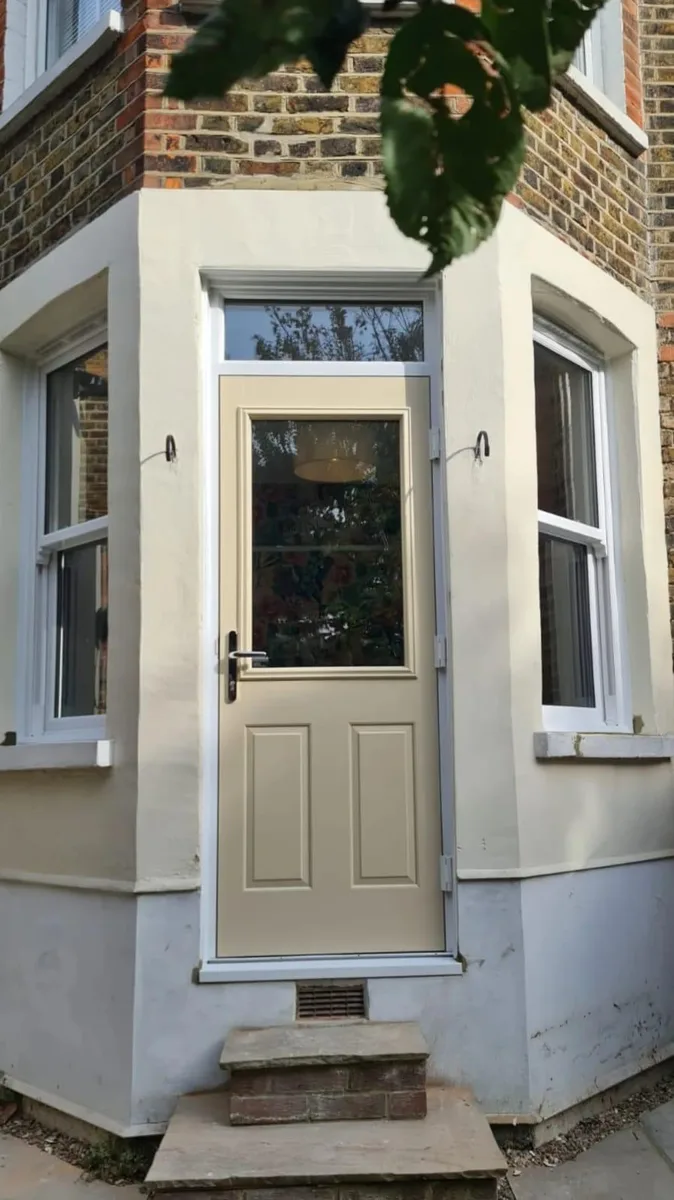
An Essex semi, a Romford terrace and a Hertfordshire cottage can call for very different door designs. Choose a finish you want to live with and a fitted specification that suits your particular opening.
What to ask at the in-home survey
Show the surveyor where the door sticks or lets in draughts. Point out water marks, damaged seals or movement, and explain what you want to change. Alongside the measurements, ask:
- What is being replaced? Is the quote for the leaf alone or a complete frame and door set? What happens to the old frame, sidelights and fanlight?
- How will it fit this opening? Discuss reveal depth, opening direction, frame fixing, external seal, drainage, threshold and the finish where the new frame meets plaster, brick or floor.
- What exactly is the product? Ask for the door style, core or panel construction, colour on both faces, glazing layout and finish, and the thermal and security specification for that configuration.
- What hardware is included? Get the lock and cylinder, handles, letterplate, hinges and any upgrade described in writing, not just as "standard hardware".
- What does the price include? Ask whether removal, disposal, making good and handover are included, and what could change the price if hidden damage appears.
- What paperwork follows fitting? Have the installer state the product and installation guarantees and any building regulations certification in the quote.
Put the finish samples beside the written specification before deciding. If the survey shows that your present door can be repaired, weigh that against the cost of a new one.
The verdict
For an entrance that defines the look of the house, a composite door may earn its higher price. A uPVC door is a sensible buy when it gives you the look and performance you need for less. Settle the frame, glazing and fitting details at survey before you order.
How Cii can help
Cii Double Glazing is a family-run business based in Romford, established in 2009, with over 55 years of combined experience in the team. We survey and fit composite and uPVC front doors across Essex, Hertfordshire and East London with our own installers, and every installation carries our 10-year installation guarantee. If your current door only needs a repair, we will tell you. Book a free home survey and written quote to compare both options for your doorway.
FAQ
Which is better for my front door, composite or uPVC?
Composite may suit a prominent entrance where the finish and design justify the higher price. uPVC can be the better choice when a simpler look and lower fitted cost meet your needs. Compare the specified complete door sets, including glazing, lock, threshold and fitting.
What are the downsides of composite doors?
The main trade-off is a higher upfront price. Composite leaves are heavier, and direct sun can affect how a door operates if its finish, clearances or alignment are unsuitable. Ask how the proposed door suits the position of your entrance.
Do composite doors swell in the heat?
Door materials expand and contract with temperature, and direct sun may make a poorly adjusted door harder to operate. Stiffness does not automatically mean the leaf needs replacing. Have its alignment, hinges, seals and locking mechanism assessed first.
What type of front door is best for full sun?
Neither material wins simply because it faces the sun. Ask the surveyor about the finish, colour, manufacturer guidance and fitting clearances for your doorway. The door set must suit its orientation and operate smoothly.
How much does a composite front door cost fitted?
The fitted price depends on the opening and the specification. Glazing, frame, sidelights, hardware, threshold, removal and making good can all change it. Ask for an itemised written quote after survey for the complete installation, so you can compare it fairly with a uPVC quote for the same opening.